CALL TODAY FOR A FREE CONSULTATION 972-392-1249
What Bill's Clients Say
The experiences of our clients speak for themselves.


 Trustindex verifies that the original source of the review is Google.
 Trustindex verifies that the original source of the review is Google.
 Trustindex verifies that the original source of the review is Google.
 Trustindex verifies that the original source of the review is Google.
 Trustindex verifies that the original source of the review is Google.
 Trustindex verifies that the original source of the review is Google.
 Trustindex verifies that the original source of the review is Google.
 Trustindex verifies that the original source of the review is Google.
 Trustindex verifies that the original source of the review is Google.
 Trustindex verifies that the original source of the review is Google.
Texas has no statewide bicycle helmet law for riders of any age, though several cities, including Dallas, Austin, Houston, San Antonio and Arlington, require helmets for riders under 18 or under 14 within city limits. Not wearing a helmet does not make you responsible for a crash a driver caused, and it cannot be used to argue about injuries below your neck. Under Texas proportionate responsibility law, a defendant may try to argue that your head injury would have been less severe with a helmet, but the defense has to prove that with evidence, and if your share of responsibility stays at 50 percent or below your recovery is reduced by that percentage rather than eliminated. Bill Shirer, a board-certified personal injury trial lawyer who represents cyclists across Texas, handles the helmet question in nearly every head injury case.
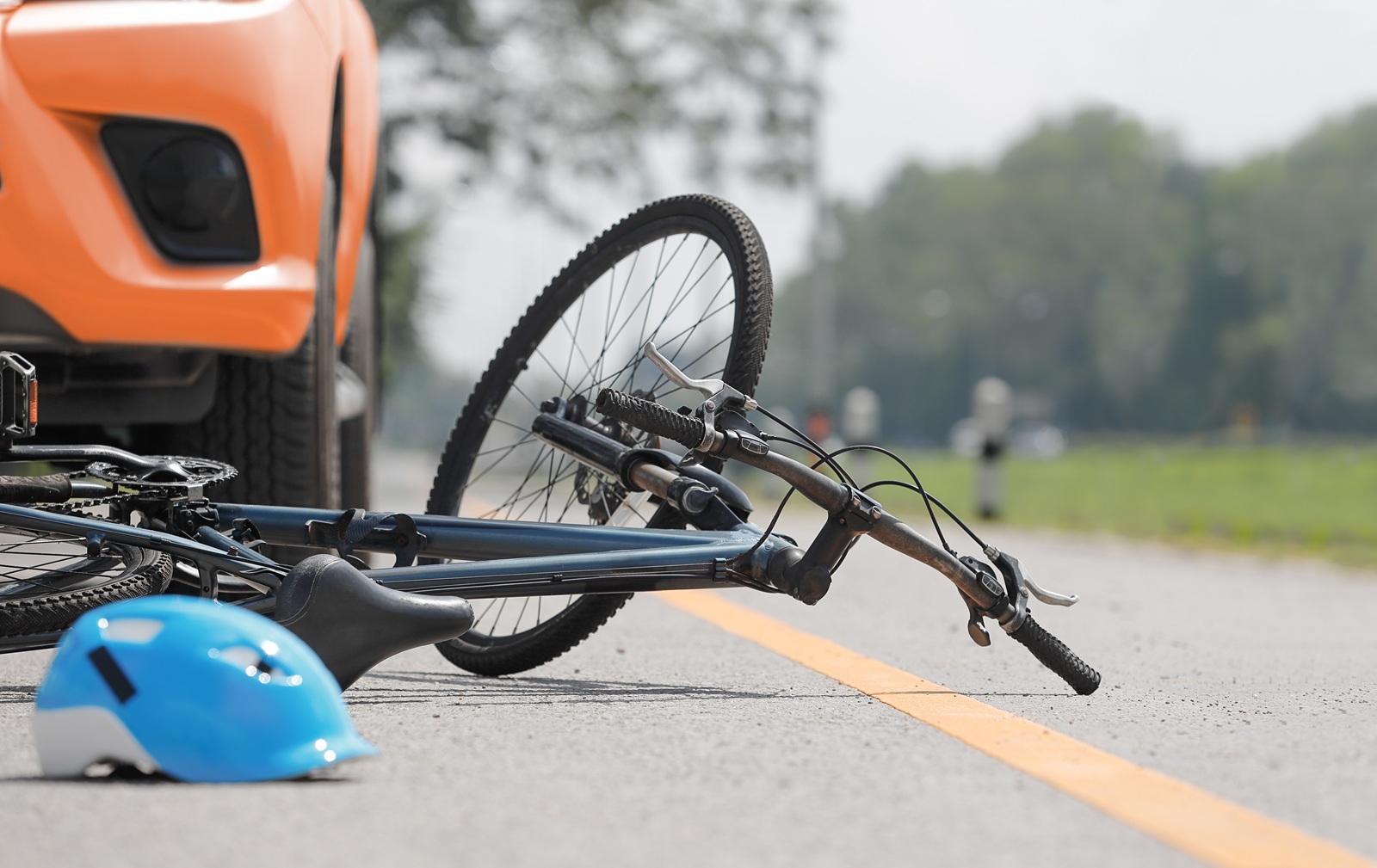
After a crash, the first thing an adjuster or defense lawyer often asks a cyclist is whether they were wearing a helmet. The question is asked for a reason: the insurer hopes the answer will shrink the claim. Riders, and parents of riders, are often unsure whether Texas even requires a helmet, let alone what the answer means for a case.
This guide, prepared by Cyclist at Law, explains what Texas law actually says about bicycle helmets, which cities have their own rules, how Texas comparative fault works, and the specific, limited way the helmet question can affect an injury claim. This is general information, not legal advice, and reading it does not create an attorney-client relationship.
No. There is no statewide bicycle helmet requirement in Texas for any age. Chapter 551 of the Texas Transportation Code, which governs how bicycles operate on Texas roads, requires lights at night, a brake, and compliance with traffic laws, and says nothing about helmets. The Legislature considered a statewide youth helmet bill in 1999 and did not pass it, and it has not revisited the question since. Motorcycle riders are a different matter: Texas requires motorcycle helmets for riders under 21 and for others without a qualifying exemption, which is why the two rules are often confused.
What Texas does allow is local regulation. A number of cities have passed ordinances requiring helmets for minors, and in each case the ordinance applies to anyone riding inside that city's limits, resident or not.
City | Helmet ordinance | Notes |
Dallas | Required for riders under 18 | Adult requirement was repealed in 2014; confirm current code |
Austin | Required for riders under 18 on public property, including trails and parks | Applies to e-bikes and scooters as well |
Houston | Required for children under 14, including passengers in child seats and trailers | Parents can be cited; confirm current code |
San Antonio | Required for riders under 18 | Confirm current code |
Arlington | Required for riders under 18 | Confirm current code |
Fort Worth | No general adult requirement; check the current city code for minors | Confirm current code |
Most suburbs and rural areas | No ordinance | State law alone applies |
Because the rule changes at the city line, a group ride that starts in Plano and ends in Dallas can cross from no requirement into an under-18 requirement without anyone noticing. For e-bikes, the same local ordinances apply; see our guide to Texas e-bike laws.
Texas assigns each party a percentage of responsibility, reduces your recovery by your percentage, and bars recovery entirely if your share is more than 50 percent. The rule is called proportionate responsibility and it is set out in Chapter 33 of the Civil Practice and Remedies Code.
In a bicycle case the jury, or the adjuster negotiating in the shadow of a jury, decides what percentage of responsibility belongs to the driver, the cyclist, and anyone else involved, such as a city that left a hazard in a bike lane. If the cyclist is assigned 20 percent, the cyclist recovers 80 percent of the damages found. If the cyclist is assigned 51 percent, the cyclist recovers nothing.
The question the helmet raises is which bucket it goes in. Our post on comparative negligence in a bicycle accident covers the general rules; the rest of this post covers the helmet specifically.
No. A helmet has nothing to do with why a crash happened, and it cannot be used to shift responsibility for causing the collision. This is the distinction that matters most, and it is the one general articles tend to blur.
There are two separate causation questions in every injury case:
Who caused the crash? The driver who turned left across the bike lane, the rider who ran a red light, the contractor who left a steel plate in the road. A helmet is irrelevant here. Wearing or not wearing one did not make the driver look or fail to look.
What caused the extent of the injury? This is where a defendant may argue that a particular injury, almost always a head injury, would have been less severe with a helmet. Texas lets a jury consider a plaintiff's conduct that contributed to the injury, not just the accident, but only with proof.
Because the helmet question lives entirely in the second category, it has no bearing on injuries that a helmet does not protect: a broken collarbone, road rash, a fractured wrist, a torn rotator cuff, spinal injuries, a lost bike. In many cyclist cases those are most of the damages, and the helmet defense cannot touch them.
That a helmet would have prevented or lessened the specific head injury you suffered, which usually requires expert testimony the defense has to pay for and the jury has to believe. It is not enough to say helmets are a good idea or to cite a general statistic; the CDC publishes helmet effectiveness data, and defendants cite it, but a jury is asked about this rider, this impact and this injury.
The legal framework comes from an analogy. In Nabors Well Services v. Romero in 2015, the Texas Supreme Court held that a car passenger's failure to wear a seat belt could be considered by the jury in apportioning responsibility for the injuries caused, overruling a decades-old rule that excluded seat belt evidence. The court was careful: seat belt nonuse could go to the injuries it actually contributed to, not to causing the crash, and the defendant had to connect the nonuse to the harm with evidence. Texas courts have not announced a bicycle helmet rule, but defense lawyers argue Nabors by analogy, and most trial courts will let a properly supported helmet argument reach the jury.
Properly supported is the key phrase. The defense generally needs a biomechanical or medical expert to testify that, at the speed and angle of this impact, a helmet meeting the federal standard would have reduced this injury. That argument weakens or fails when:
The impact was at a speed or angle beyond what a bicycle helmet is designed to absorb, which is common in car-versus-bike collisions
The injury is to the face, jaw or neck, which a standard helmet does not cover
The injury is a diffuse brain injury from rotation rather than a skull fracture from direct impact
The defense expert cannot explain how the helmet would have changed the outcome rather than simply asserting it
The rider was in a city with no ordinance and was an adult, so there was no violation of any rule to point to
Our post on head injuries in bicycle accidents explains how these injuries are documented and valued, which is the other half of defeating a helmet argument.
An ordinance violation gives the defense something to point to, but it still has to connect the violation to the head injury, and children are judged by a child's standard of care. A 15-year-old riding helmetless in Austin has violated a city ordinance. That fact may be admitted, and a defendant will argue it shows carelessness. It does not change the causation analysis: the ordinance did not cause the driver to hit the child, and a reduction can only attach to the injuries a helmet would have affected.
Texas also measures a minor's conduct against what a reasonable child of the same age, experience and intelligence would do, not against an adult standard, which blunts the argument further for younger riders. Parents should know that the ordinances in Houston and some other cities also allow the parent to be cited, which is a separate matter from the injury claim.
Tell the truth, say it once, and do not volunteer opinions about whether a helmet would have mattered. The helmet question is usually asked in the first adjuster call, which is one reason cyclists should never rely on auto insurance adjusters.
If you were wearing a helmet, keep it. Do not throw it away or let anyone take it. A cracked helmet is physical evidence of the force of the impact and, counterintuitively, helps show the crash was severe.
If you were not wearing one, do not speculate to an adjuster about whether it would have helped. That is a medical and engineering question, not something you know.
Document the injuries that have nothing to do with the head, because those are untouchable by the helmet defense.
Get the police report and witness information; crash causation is where the case is won. Our what to do after a bicycle accident checklist covers the first 48 hours.
And for the ride before the crash: wear the helmet. Texas Department of Transportation crash data shows cyclist deaths in Texas have risen over the past decade, and the majority of fatal bicycle injuries involve the head. The helmet protects you first and your case second; see protect yourself before a crash for the rest of the pre-ride checklist, including the insurance coverage most cyclists do not know they need.
By separating crash causation from injury causation on day one, documenting every injury the helmet could not have affected, and forcing the defense to prove its helmet theory with real evidence rather than a statistic. Bill Shirer has represented cyclists exclusively for years, has raced since 1987, and is board-certified in personal injury trial law by the Texas Board of Legal Specialization. He knows how a crash unfolds at speed because he has been in them.
In practice that means retaining the right medical and, when needed, biomechanical experts early, reconstructing the collision to establish the driver's responsibility, and refusing to let an adjuster treat 'no helmet' as a discount code. Where a rider was wearing a helmet, the helmet becomes evidence of impact severity; where a rider was not, the argument is confined to the injuries it could have affected and tested against the facts of the impact. Bill represents injured riders across Texas; see the areas served across Texas.
Is it illegal to ride a bicycle without a helmet in Texas?
Not under state law. Texas has no statewide bicycle helmet requirement for any age. Some cities, including Dallas, Austin, San Antonio and Arlington, require helmets for riders under 18 within city limits, and Houston requires them for children under 14.
Do adults have to wear bike helmets in Dallas or Fort Worth?
No. Dallas repealed its adult helmet requirement in 2014 and now requires helmets only for riders under 18. Fort Worth has no general adult requirement. Check the current city code for minors before riding, since ordinances change.
Can I still recover damages if I was not wearing a helmet?
Yes. Not wearing a helmet does not bar a claim in Texas. At most, a defendant can argue that a specific head injury would have been less severe with a helmet, and if the jury agrees your recovery for that injury is reduced by your assigned percentage, as long as your share stays at 50 percent or below.
Does not wearing a helmet make me at fault for the crash?
No. A helmet has no effect on why a collision happened. The helmet question can only relate to the severity of a head injury, never to who caused the crash.
Can the helmet argument reduce compensation for a broken arm or road rash?
No. The argument is limited to injuries a helmet could have affected, which means head injuries. Injuries to the rest of the body, and the value of the bike, are unaffected.
What does the insurance company have to prove about the helmet?
That a helmet would have prevented or reduced your specific head injury given the speed and angle of the impact, usually through a medical or biomechanical expert. A general statistic about helmet effectiveness is not proof about your injury.
What is Nabors v. Romero and why does it matter for cyclists?
It is a 2015 Texas Supreme Court decision holding that a car occupant's failure to wear a seat belt can be considered in apportioning responsibility for injuries, with evidence connecting the nonuse to the harm. Texas courts have not announced a bicycle helmet rule, but defendants argue the same reasoning applies to helmets.
My child was riding without a helmet in Austin and was hit. Does the ordinance hurt the case?
The ordinance violation can be raised, but it does not change who caused the crash, it applies only to head injuries a helmet would have affected, and a minor's conduct is judged by the standard of a reasonable child of the same age, not an adult.
Should I keep my helmet after a crash?
Yes. A damaged helmet is evidence of the force of the impact and supports the injury claim. Do not discard it or give it to anyone other than your attorney.
Should I tell the adjuster whether I was wearing a helmet?
Answer truthfully if asked, but do not speculate about whether a helmet would have changed your injuries. That is an expert question. Better still, speak with a bicycle injury attorney before giving any recorded statement.
Cyclist at Law is the practice of Bill Shirer, a board-certified personal injury trial lawyer and partner in McGilberry & Shirer, LLP, who represents injured cyclists exclusively across Dallas-Fort Worth, Houston, Austin, San Antonio and the rest of Texas. The consultation is free, there is no fee unless the case is won, and bike property damage is handled at no extra charge when Bill represents you on the injury claim.
Call 972-392-1249 or request a free consultation online. Bill reads every message personally and responds the same day.
Statewide Service
Based in Dallas, I represent cyclists across the entire state of Texas.
Cyclist accidents anywhere in Texas — Bill represents you wherever the crash occurred.